Above & Below — A Quarterly Publication of The Thames Club

Homecoming

Issue One

The first meal ashore. Thirty-one years in Building 260. Two banks of one river. A record of the community that gathers at the Thames Club — the sailors, builders, physicians, attorneys, engineers, educators, and families who share a room and a first-name basis on the New London bank of the Thames.

The Thames Club · 290 State Street · New London, CT 06320
thamesclub1869.com
From the Walls
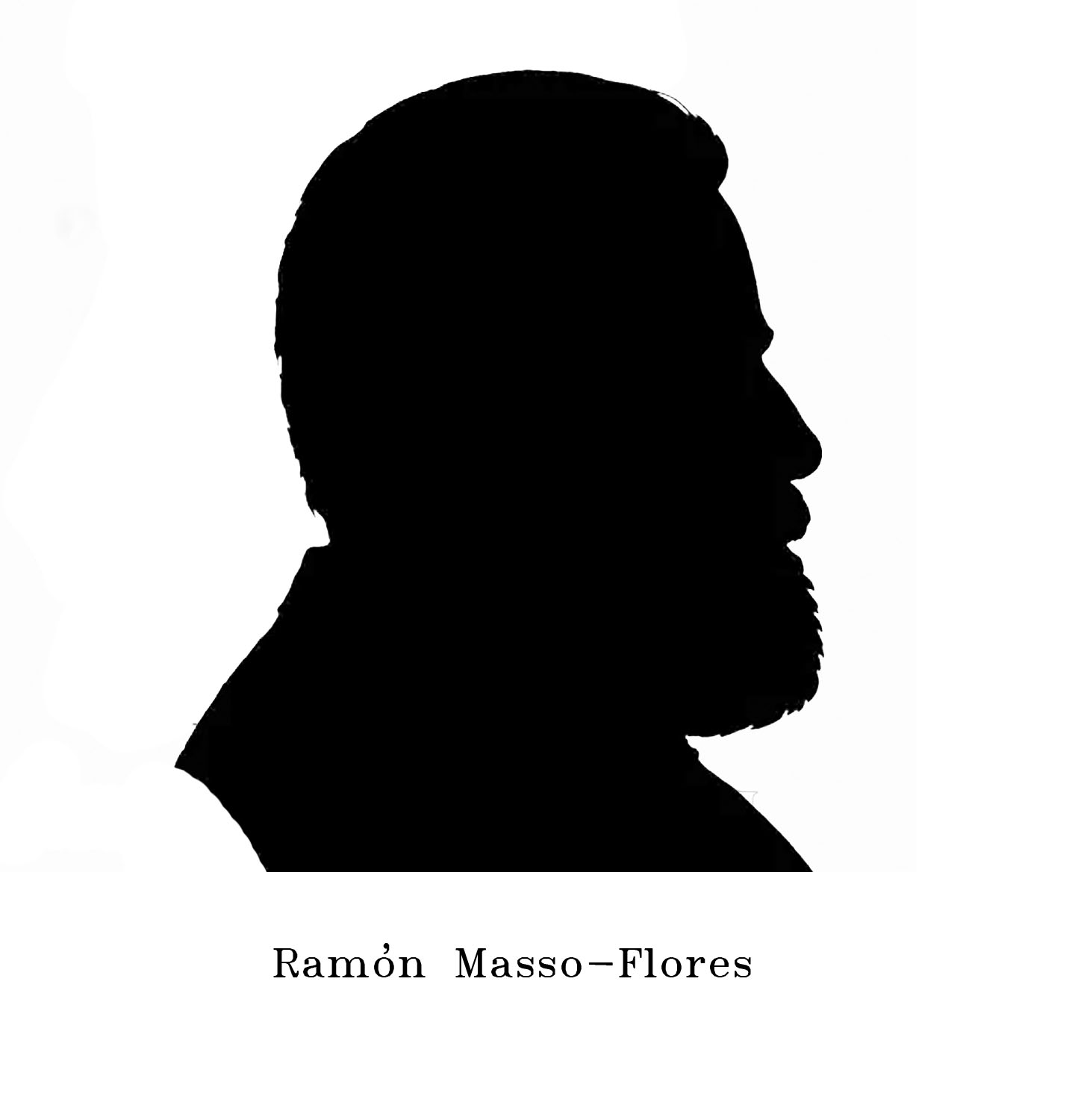
Ramón Masso-Flores
By Ramón Masso-Flores, Senior Chief Petty Officer (Ret.), U.S. Submarine Service
President of the Thames Club

I came to New London the way most of us do  -  orders in hand, a family to settle, and not much time to think about whether this was home or just the next assignment. That was the submarine life. You went where the boats were.

The boats were here.

I spent my years in the Navy working on reactors. Not a job that invites casual conversation at dinner parties, but one that demands everything you have  -  precision, patience, a willingness to be responsible for things that cannot go wrong. You learn, in that environment, that the man next to you is all you have. Rank matters. Competence matters more. And what a person carries inside them  -  their character, their steadiness  -  matters most of all.

It was law school next and after retirement I found my way to the public defender's office. Different uniform, same instinct: stand next to the person who needs someone standing next to them. The work was hard and often thankless and I would do it again.

New London had become home by then. Not because orders kept me here, but because the city had gotten into me the way certain places do  -  quietly, without announcement, until one day you realize you're not passing through anymore. I got involved with Church of the City. I found community there, and responsibility, and the particular satisfaction that comes from showing up consistently for something larger than yourself.

The Thames Club came later, and it surprised me. I'll be honest  -  when I first crossed that threshold, I wasn't sure it was my kind of place. Old building, long history, the weight of a hundred and fifty years in the woodwork. But what I found inside was something I recognized from the boats: people who took their obligations seriously and didn't make a production of it. People who showed up.

I became president. I'm still not entirely sure how that happened, except that I've never been good at standing on the sideline.

If you're new to this area  -  if the Navy or Electric Boat, Dominion or Offshore power; science, medicine, law or commerce; the work that defines this region has brought you here  -  I want you to know something. This community is deeper than it looks from the outside. The river, the base, the yards, the hospital, the neighborhoods  -  they have been shaped by people like us for a very long time. We are part of that history whether we know it yet or not.

The Thames Club has been here since 1869. It has seen a great deal. It is not a museum, though  -  it is a place where people gather, eat, argue, laugh, and occasionally bowl badly. It is, in the oldest sense of the word, a club: a place that belongs to its members, and whose members belong to each other.

Come and see it. Sit at the bar. Stay for lunch. The walls have stories, and so do the people who walk past them every day.

So do you.
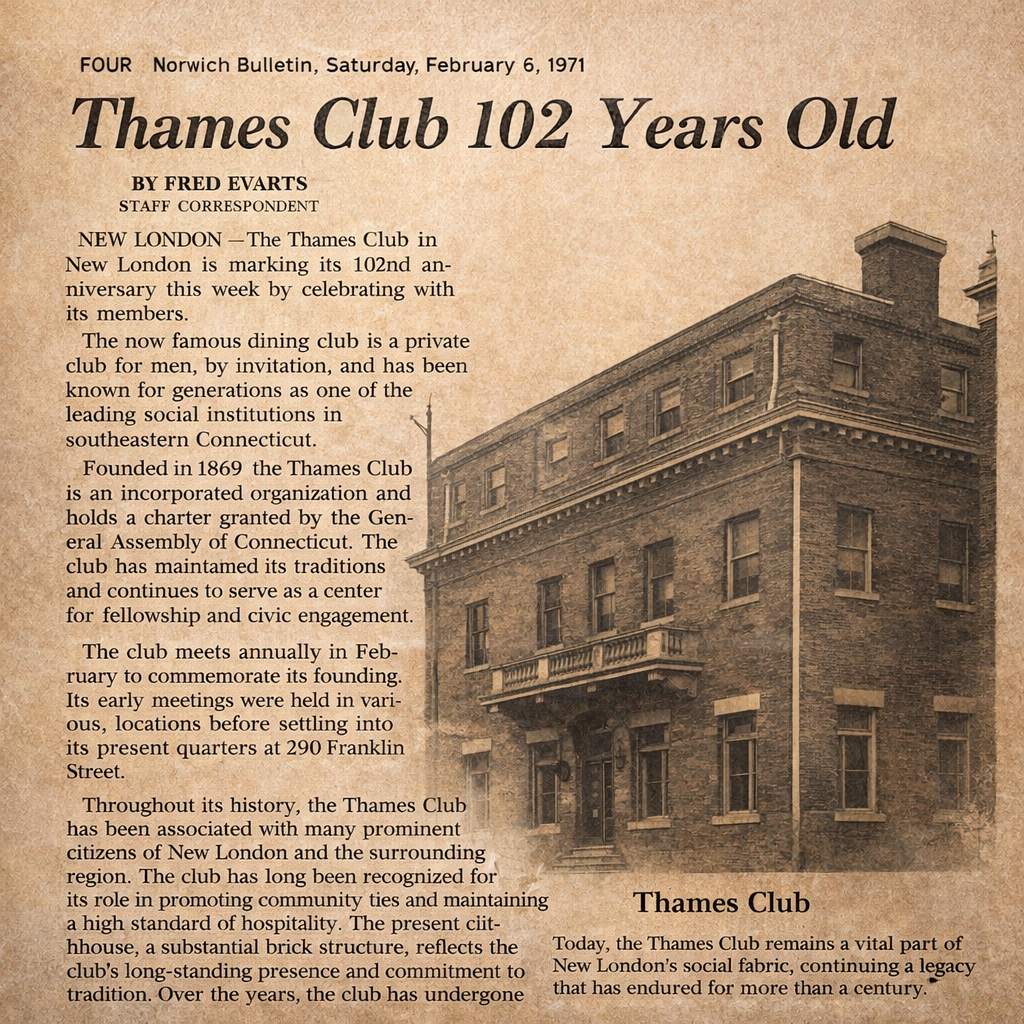


Thames Club — 102 Years
Above and Below

The Clubs Are Gone. This One Stayed.

Opening Essay — Issue One

There used to be a place on every base where you could sit down. Not the mess hall. Not the chow line. A place with tablecloths and conversation and a drink you didn't have to rush through before the next watch. Officers' clubs. Chiefs' clubs. They had different names and different rules, but they served the same purpose: they were where military people could be people. Where rank still mattered but relaxation was permitted. Where friendships formed over something other than a mission briefing.

Those places are mostly gone now. Consolidated, defunded, closed. The buildings sometimes remain — repurposed as conference centers or administrative offices — but the life inside them has vanished. An entire social architecture, altered, consolidated, and in many places lost.

We noticed.

The Thames Club has stood in New London since 1869. We predate the submarine force by three decades. We have watched the boats come and go from this river for more than a century. Our walls hold the photographs of members who served in every branch, every era. We have been, for a hundred and fifty-five years, the kind of place that bases used to have and no longer do.

But here is what makes it better than a base club ever was: you sit down next to people you would never meet inside the fence. Physicians. Attorneys. Architects. Educators. Clergy. Business owners. Theater people. The room holds thirty professions and no rank structure. The doctor has a first name here. So does the retired admiral and the plumber.

———

There is another table worth knowing about.

It is roughly four feet long and bolted to the deck of a submarine. The tablecloth is white linen, dampened with seawater — a tradition carried forward from the age of sail, when the moisture kept plates from sliding as the ship rolled. Navy blue-and-white china. Silver flatware. Officers seated by seniority. A few feet away, the crew's mess: four tables, twenty seats, a rotation that runs through every watch because there isn't room for everyone at once.

The galley that serves both is the size of a family bathroom. A team of six cooks produces four meals a day, every day, for months, from scratch. Bread baked daily. Saturday night pizza and wings. Sunday prime rib. Everything made by hand in a space that would get a restaurant shut down. Ask any submariner what they remember about being underway and they'll get to the food within two minutes. It was the best part of the day, and the cooks knew it.

This is the submarine way. Excellence produced under conditions that don't permit excuses. The cooks understand what every submariner understands: when you are on patrol for ninety days, the things that seem small become the things that hold you together. The meal. The conversation around it. The moment when the work pauses and you sit across from someone who knows exactly where you are, because they're there too.

———

This publication is called Above and Below because that is where this community lives — on the surface and beneath it, in New London and at sea, in the shipyard and in the deep. It is also where this club lives: above, in a city whose membership spans every profession in the region; and below, in the quieter knowledge that some of the most disciplined people in the country walk through here without ceremony and find themselves talking baseball with a playwright.

The clubs are gone from the bases. But here is one that stays.

The table is set.

The Profile

Thirty-One Years in Building 260

A Composite Portrait — Issue One

If this is you, you already belong. We just haven't met yet.

His hands are the first thing you notice. Not damaged, exactly, but used. The kind of hands that make you conscious of your own.

He started at Electric Boat in 1993, the week after his twentieth birthday. His father had worked there. His uncle before that. Nobody sat him down and said this is what you're going to do. It was more like gravity. He grew up in Ledyard, twelve minutes from the yard, and the yard was where the work was.

"First day, I didn't understand anything." He's not being humble. He means it. "They put me on a crew doing fit-up work and I couldn't — the tolerances, the prints. Guys next to me had fifteen years in. They'd look at a weld and just know. Took me a year before I started to get it. Two years before I trusted my own work."

What he does is join metal. The simple version. The complicated version involves tolerances measured in thousandths of an inch, welds that must be perfect because they will be submerged under pressure for decades, and quality standards enforced by people whose job is to find the one thing you did wrong. He has worked on six classes of submarine. He cannot name most of them, or describe what he did in specificity, because the work is classified. Thirty-one years of his life, and he can't put it on a résumé.

"You get used to that. People ask what you do and you say 'I work at the boat yard.' That's it. What am I going to say? Can't tell them the interesting stuff."

He works in Building 260 — one of the massive structures along the Groton waterfront visible from the Gold Star Bridge, where submarine sections are assembled before being joined at the graving dock. Inside it is loud, organized, and surprisingly clean. The work moves slowly. The standards do not move at all.

Three of his four kids grew up within earshot of the yard's shift whistle. His oldest daughter is a nurse at L+M. His son thought about the yard but went into HVAC. "He's doing fine," he says, in a tone that closes the subject.

He has never been on a submarine at sea. He has been aboard many of them in the yard — in spaces most sailors never see, with tools and blueprints, doing work that will disappear inside a hull and never be inspected again by human eyes.

The crew that sails the boat will not know his name. He is fine with this. He shifts in his chair when he says it.

"Sometimes I watch one go down the river. And I know which sections I worked on. I know where my welds are. And I think — those guys are gonna go under in that thing, and they're gonna trust it completely. Part of why they can is 'cause I didn't cut a single corner. Not once. Thirty-one years." He pauses. "You don't get a letter for that. Nobody calls. But you know."

He has never been to the Thames Club. He has driven past it hundreds of times. He is not sure if it's the kind of place for someone like him.

It is. And inside, he'd find himself sitting next to a doctor and an attorney and a retired Navy captain — all on a first-name basis. That part usually surprises people.

This profile is a composite drawn from conversations with Electric Boat tradesmen. No single individual is depicted. "The Profile" will appear in every issue. If you know someone whose story deserves to be told — a submariner, a builder, a family member, a physician, a veteran, a member — we would like to hear from you.

Shipyard welder at work
The Table

A Homecoming Dinner

A Menu for the First Real Meal Ashore · Serves Eight · New England Winter

On a submarine, you dream about fresh food the way you dream about sunlight — not constantly, but in sudden, aching flashes. Weeks into a patrol, when the last of the lettuce is gone and the eggs are powdered, someone will say something about a tomato. A real one. Or a steak with the bone still in it, because the galley's steaks have the bones trimmed off to save freezer space.

This menu is for the moment after. The first real dinner ashore. It starts where the submarine galley — which does remarkable work under impossible conditions — leaves off: fresh, local, unhurried.

A good whiskey after dessert is appropriate. Something with smoke and a little sweetness — a Balvenie DoubleWood or a Redbreast 12.

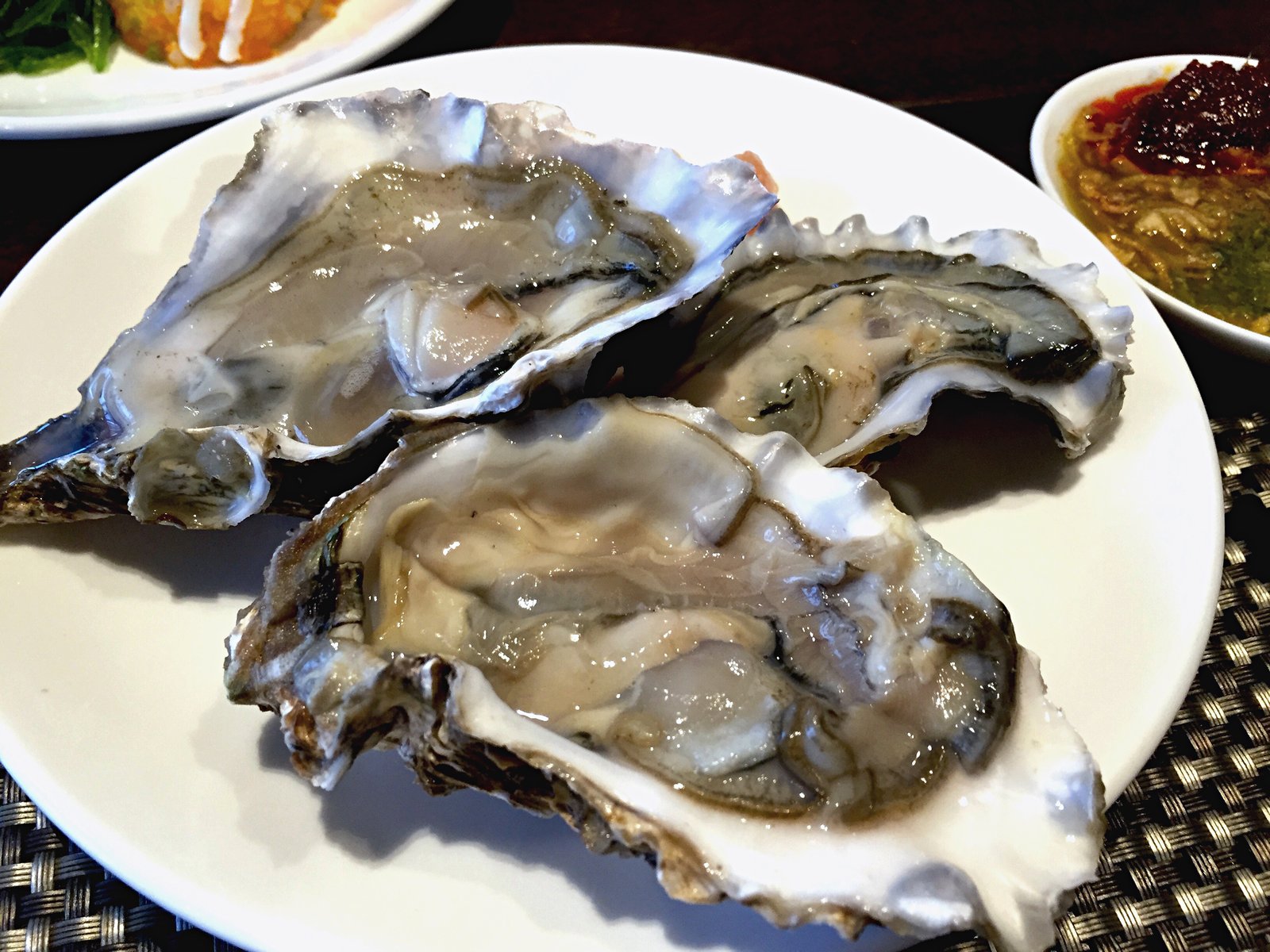
Fresh oysters on the half shell

Photograph by NuCastiel · CC BY 2.0 · resized

A note on the galley: Submarine cooks receive the highest food budget per sailor in the Navy. Many train at the Culinary Institute of America. They bake bread from scratch daily. They do it underway, without daylight, for months. This dinner doesn't compete with the galley. It picks up where the galley, by necessity, leaves off. The cooks would understand.

"The Table" will appear in every issue with a complete menu tied to the theme. Complete recipes are available through the Club.

The River

Two Banks, One Community

The Thames River Corridor

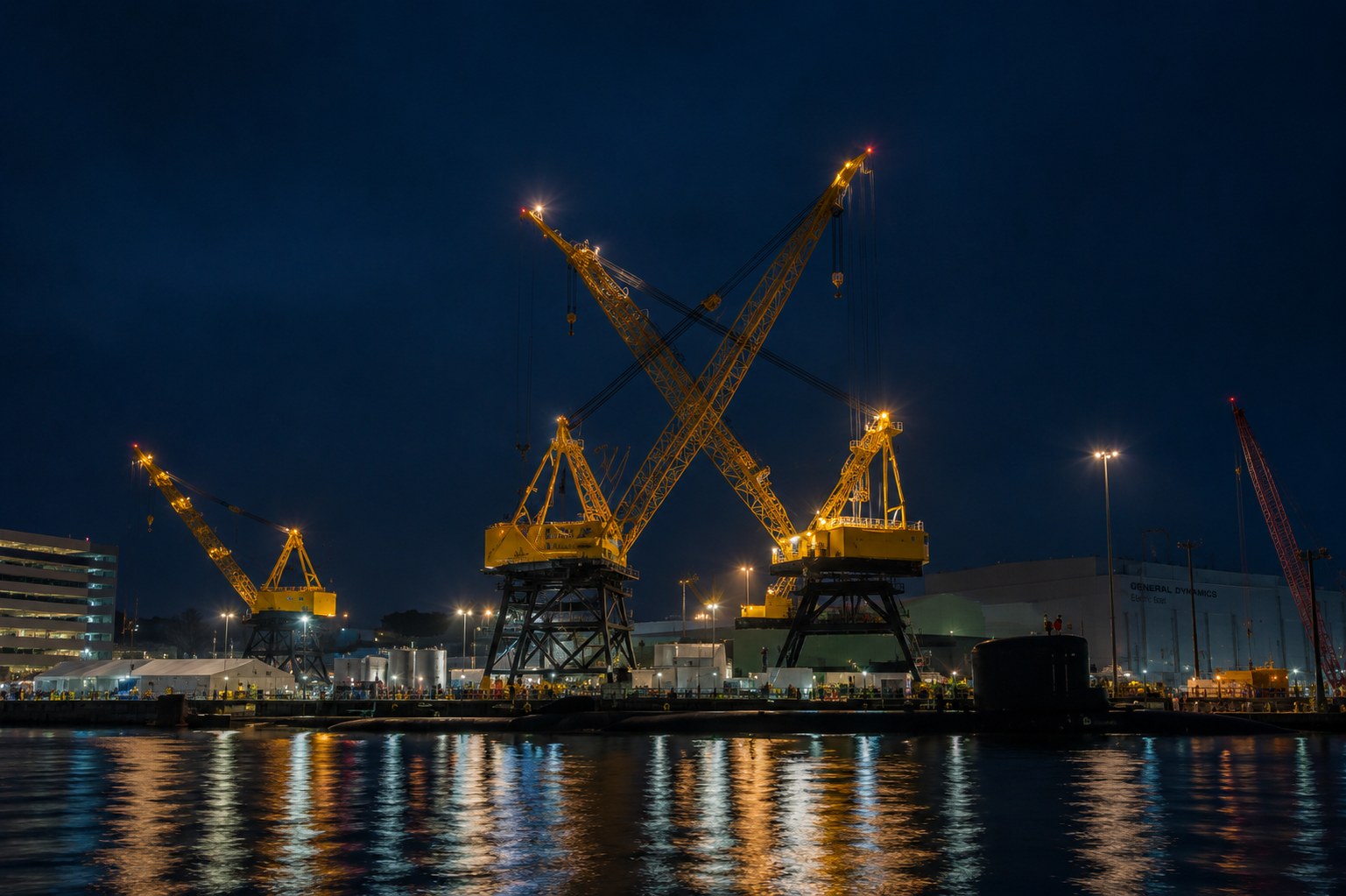
The Thames is not a wide river. Standing on the New London side, you can see Groton clearly — the cranes at Electric Boat, the piers at the submarine base, the long shape of a boat tied up alongside. On a quiet morning, the sound carries: the industrial hum of the shipyard, the diesel of a harbor tug.

The submarine base was established in 1916. Electric Boat's lineage stretches to the commissioning of USS Holland in 1900. Since then, generations have crossed this river daily — to build, to train, to deploy. But the river community was never only submarines. New London was commerce, institutions, law, medicine, education. Groton was the yard. The people who built the boats on one side lived, worshipped, doctored, litigated, and taught on the other.

The Thames Club, sitting on the New London bank since 1869, has been a gathering point for this cross-river community longer than any other institution still standing. Merchants and whalers first. Then naval officers and shipbuilders. Then the physicians who treated the families, the attorneys who handled the estates, the clergy who served the congregations, the educators who taught the children. The membership rolls, across a hundred and fifty-five years, read like a census of every profession the river corridor has sustained.

What changes is the faces. New officers arriving for their first assignment. Young welders driving across the Gold Star Bridge before dawn. Families settling into Waterford, Ledyard, Montville, Groton. Doctors taking positions at Lawrence + Memorial. Teachers starting at the schools. They come from everywhere, and this river is the first thing they see that tells them they've arrived.

Electric Boat shipyard cranes at night on the Groton waterfront
From the Walls

Before the Boats

What the Club's Earliest Records Tell Us

The club was founded in 1869. New London was then a whaling port in its final years, a city built on the waterfront trades — shipping, chandlery, rope-making, provisioning. The men who founded the club were merchants and professionals, people who made their living from the river and gathered because gathering is what people in working communities do.

They could not have known that within thirty years, a new kind of vessel would transform their city. They were doing what felt natural: creating a place of substance where serious people could sit together.

By 1900, the USS Holland had been commissioned. By 1916, the submarine base was established on the Groton side. By the 1920s, the membership had begun to change — not dramatically, but in the way most things happen here: gradually and quietly. The club's existing culture — its discretion, its steadiness, its habit of receiving people based on character — turned out to be what the growing military and industrial community needed.

The work ahead is archival. Future issues will document the early membership rolls, photographs from the pre-World War I era, and the first recorded submariners among the membership. We also expect to find physicians, attorneys, and tradesmen from the club's first decades — the full cross-section of a working river city.

The submarine community became part of the Thames Club's story. It did not replace the story that was already here.

"From the Walls" will appear in every issue, drawing from the Thames Club's archive. We invite members with knowledge of the club's history — early records, photographs, personal accounts — to help us recover these stories.

Early Thames Club ledger
Community Notebook

Notes from the River

Events, Milestones & Recognitions
Electric Boat's Growing Workforce
General Dynamics Electric Boat continues its multi-year hiring campaign supporting Columbia-class and Virginia-class programs. Thousands of new skilled workers — and their families — are arriving in the Thames River corridor. If you are one of them, welcome. This is a place that knows how to absorb good people.
The Submarine Force Library and Museum
Three miles from where you are reading this, on the Groton waterfront. Free and open to the public. The memorial to the fifty-two submarines and 3,506 submariners lost in World War II is on the grounds. If you have not visited recently, go.
Connecticut Storytelling Center
Founded some forty years ago at Connecticut College, the Connecticut Storytelling Center now maintains its home on the third floor of the Thames Club, including an office, storage space, and the center's 800-volume storytelling collection in the library.
At the Club
Thursday evenings remain open for guests by introduction. Rotary and Kiwanis meet regularly. Lunch with Chef Jon runs Tuesday through Thursday. Pub food Wednesday through Saturday. If you've thought about visiting, Thursday is a good place to start. No ceremony. Just come.
A Note to Everyone Who Isn't a Submariner
This first issue leans toward the submarine community because the Above & Below initiative is new and the story needed telling. But this publication belongs to the full membership — the physicians, educators, attorneys, architects, clergy, business owners, and everyone else who has found a seat in the room. Future issues will reflect the complete community. Your stories are just as welcome.

Share a story: Above and Below is built on the stories of this community. Retirements, milestones, homecomings, losses, or simply a story worth telling — contact the editorial committee through the club.

The first meal ashore is never about the food.
It is about sitting across from someone who waited.

Silent Running
The Thames Club

The table is set.

Membership is by introduction. If you recognize something in these pages, we invite you to visit.

Arrange a Visit Call (959) 264-2733 Return to Home